Etiqueta: SPAIN

La ultraizquierda a favor de la invasión musulmana en el aniversario de la ‘Toma de Granada’ / The ultra-left in favor of the Muslim invasion on the anniversary of the ‘Toma de Granada’

26166851_142571663196798_8397585533785773170_n

Ayer se celebró el 525 aniversario de la Toma de Granada, un hecho ocurrido en 1492 y con el que se culminaron ocho siglos de Reconquista cristiana contra la invasión musulmana de España.

Como viene siendo habitual, la ultraizquierda no perdió la oportunidad de rechazar un hecho glorioso de nuestra historia, demostrando su más absoluta ignorancia al respecto, y su habitual hispanofobia.

26168405_142571989863432_8699048973069438289_n

Mientras ayer critican la Toma de Granada, tachándola de “genocidio”, celebran un genocidio comunista.

26113967_142572846530013_7805375404915462572_n

Hace falta ser muy ignorante para llamar “genocidio” a aquel hecho que, no supuso la eliminación de la población musulmana de Granada.

Es decir, que el mensaje no es que los genocidios no se celebran, sino que pueden celebrarse los genocidios comunistas, pero no las gestas históricas españolas aunque no fuesen ningún genocidio.

Al final, todos los posicionamientos de la ultraizquierda sobre la historia de España se reducen a una misma cosa: la hispanofobia. La ultraizquierda odia a España porque la trayectoria histórica de nuestra Nación está estrechamente ligada a la Cristiandad, motor de la Reconquista.

Los comunistas tienen en común con los islamistas el haberse quedado con las ganas de someter a España, cómo trataron de convertir a España en los años 30 en un satélite de la URSS.

inglaterra

Yesterday, the 525th anniversary of the Taking of Granada was celebrated, an event that took place in 1492 and that culminated eight centuries of Christian Reconquest against the Muslim invasion of Spain.

As usual, the ultraleft did not lose the opportunity to reject a glorious event in our history, demonstrating its absolute ignorance about it, and its usual hispanophobia.

26168405_142571989863432_8699048973069438289_n

While yesterday they criticize the Taking of Granada, calling it «genocide», they celebrate a communist genocide.

26113967_142572846530013_7805375404915462572_n

It is necessary to be very ignorant to call «genocide» to that fact that, did not suppose the elimination of the Muslim population of Granada.

That is to say, the message is not that the genocides are not celebrated, but that the communist genocides can be celebrated, but not the historical Spanish exploits even if they were not genocide.

In the end, all the positions of the ultra-left on the history of Spain are reduced to the same thing: the hispanophobia. The ultra-left hates Spain because the historical trajectory of our Nation is closely linked to Christianity, the engine of the Reconquest.

  The communists have in common with the Islamists to have stayed with the desire to subdue Spain, how they tried to turn Spain in the 30s into a satellite of the USSR.

Leónidas Tur

Aumentan los casos de violencia protagonizados por inmigrantes magrebíes / Increase in cases of violence carried out by North African immigrants

fb_img_1514307705828

En los últimos días han tenido lugar varias agresiones y capítulos violentos protagonizados por inmigrantes magrebíes, hechos muy graves que se han cobrado la vida de un transportista en Murcia.

El macabro suceso tuvo lugar en el día de Navidad cuando cuatro marroquíes mataron a un repartidor de pan cuando comenzaba su jornada laboral.

Los cuatros jóvenes con edades comprendidas entre los 14 y 19 años, circulaban a toda velocidad con un vehículo que acaban de robar en la localidad de Sangonera. Al encontrarse con una patrulla de policía, aceleraron colisionando con la furgoneta de reparto del transportista ocasionándole la muerte.

En Bilbao, un joven de 23 años ha perdido un ojo tras recibir una brutal paliza propinada por un grupo de jóvenes magrebíes en las cercanías de la estación de Abando.

Los hechos ocurrieron el pasado viernes día 22 a primera hora de la mañana. El joven que iba acompañado por un amigo fue abordado por el grupo de agresores que con la intención de robarle el móvil la emprendió a golpes con los dos jóvenes. La agresión fue grabada por una cámara de seguridad sin que de momento la Ertzaintza haya identificado o detenido a nadie.

Del mismo modo en Vilanova i la Geltrú (Barcelona), seis marroquíes han sido detenidos tras proferir insultos racistas y agredir sexualmente a una mujer. Los Mossos d’Esquadra detuvieron el pasado martes a cuatro jóvenes marroquíes como presuntos autores de una agresión sexual a una mujer en el citado municipio. Un quinto agresor se encuentra detenido en un centro penitenciario y el sexto, menor de edad, ha sido puesto a disposición de la Fiscalía de Menores.

inglaterra

In recent days there have been several aggressions and violent episodes involving immigrants from the Maghreb, very serious events that have claimed the life of a transporter in Murcia.

The macabre event took place on Christmas Day when four Moroccans killed a bread delivery man when he began his workday.

The four young people between the ages of 14 and 19 were driving at full speed with a vehicle they just stole in Sangonera. Upon encountering a police patrol, they accelerated colliding with the delivery van of the transporter causing his death.

In Bilbao, a 23-year-old boy has lost an eye after receiving a brutal beating from a group of young Maghrebis in the vicinity of the Abando station.

The events occurred last Friday, the 22nd, in the early morning. The young man who was accompanied by a friend was approached by the group of assailants who, with the intention of stealing his mobile phone, began to beat him with the two young men. The assault was recorded by a security camera without the Ertzaintza having identified or detained anyone for the time being.

Similarly, in Vilanova i la Geltrú (Barcelona), six Moroccans have been arrested after profaning racist insults and sexually assaulting a woman. Last Tuesday, the Mossos d’Esquadra detained four young Moroccans as alleged perpetrators of a sexual assault on a woman in the aforementioned municipality. A fifth aggressor is being held in a penitentiary center and the sixth, a minor, has been placed at the disposal of the Office of the Prosecutor for Minors.


Redacción

Tabarnia: los separadores de Cataluña / Tabarnia: the separators of Catalonia

26114048_137544253699539_9000104369175145762_n

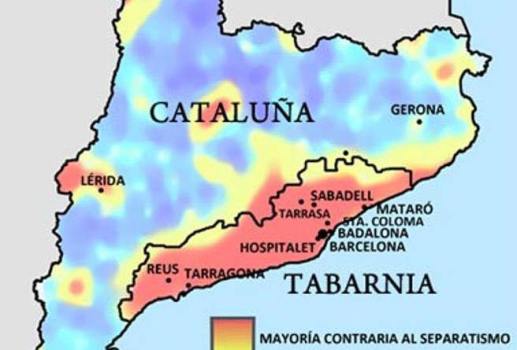
‘Barcelona is not Catalonia’ se presenta como una organización “ciudadana de base transversal, unitaria y democrática” con un objetivo claro: lograr una gestión política y fiscal propia para Barcelona al margen de la Generalitat de Cataluña. O lo que es lo mismo, crear una nueva comunidad autónoma.

El movimiento está ganando envergadura, y crece no sólo en visibilidad, también en su planteamiento. Se ha incluido a Tarragona y su área de influencia en el proyecto y el resultado es “Tabarnia”, un territorio próspero en lo económico y contrario al separatismo en lo político.

Según ‘Barcelona is not Cat’, Cataluña está formada por “dos zonas claramente diferenciadas desde el punto de vista económico, lingüístico, identitario, poblacional y social”. La división administrativa actual, denuncian, no se corresponde con la realidad, “y por tanto es necesario cambiarla”.

La denominación Tabarnia, que ha hecho fortuna en las redes sociales, sería la zona geográfica comprendida entre las áreas metropolitanas de Barcelona y Tarragona, aunque las fronteras precisas no están del todo definidas.

Así, frente a la Cataluña “cosmopolita, orgullosamente bilingüe, urbanita, multicultural e intensamente conectada con el resto de España y Europa” se erigiría la Cataluña interior o rural, de escaso peso demográfico y “mayoritariamente independentista, basada en una economía local, obsesionada con la identidad y hostil a la lengua castellana”. Y pese a su mucho menor relevancia económica y demográfica, es la segunda Cataluña, la rural, la que “parece la única existente”, denuncian en “Barcelona is not Cat”.

Aseguran reunir para su causa a más de un centenar de agrupaciones, asociaciones y empresas de todos los ámbitos de Barcelona así como ciudadanos a título particular. Han nacido como respuesta al desafío rupturista, que tachan de “profundamente negativo para los intereses de Cataluña en general y de los ciudadanos de Barcelona en particular”. De manera que, ante el riesgo de secesión, buscan marcharse de Cataluña y permanecer unidos al resto de España, apelando para ello a motivos económicos, sociales, deportivos, culturales o educativos. Y se sirven del mismo argumentario separatista para reclamar una “consulta a la ciudadanía” que determine si los barceloneses y tarraconenses se erigen en una nueva comunidad autónoma o por el contrario continúan “bajo el gobierno de la Generalitat.

Los separadores ya tienen formación política.

inglaterra

‘Barcelona is not Catalonia’ is presented as a «citizen organization with a transversal, unitary and democratic basis» with a clear objective: to achieve its own political and fiscal management for Barcelona outside the Generalitat of Catalonia. Or what is the same, create a new autonomous community.

The movement is gaining importance, and it grows not only in visibility, but also in its approach. Tarragona and its area of influence have been included in the project and the result is «Tabarnia», a prosperous territory economically and contrary to political separatism.

According to ‘Barcelona is not Cat’, Catalonia is formed by «two zones clearly differentiated from the economic, linguistic, identity, population and social point of view». The current administrative division, they denounce, does not correspond to reality, «and therefore it is necessary to change it».

The name Tabarnia, which has made its fortunes in social networks, would be the geographical area between the metropolitan areas of Barcelona and Tarragona, although the precise borders are not completely defined.

Thus, compared to the Catalonia «cosmopolitan, proudly bilingual, urban, multicultural and intensely connected with the rest of Spain and Europe» would be erected the interior or rural Catalonia, of low demographic weight and «mostly independence, based on a local economy, obsessed with the identity and hostile to the Castilian language «. And despite its much lower economic and demographic relevance, is the second Catalonia, the rural, which «seems the only existing», denounce in «Barcelona is not Cat.»

They claim to gather more than a hundred groups, associations and companies from all areas of Barcelona for their cause as well as private citizens. They have been born as a response to the rupturist challenge, which they describe as «profoundly negative for the interests of Catalonia in general and of the citizens of Barcelona in particular». So that, faced with the risk of secession, they seek to leave Catalonia and remain united to the rest of Spain, appealing for it to economic, social, sports, cultural or educational reasons. And they use the same separatist argument to demand a «consultation to the citizenship» that determines if the Barcelonians and Tarraconenses are erected in a new autonomous community or on the contrary they continue «under the government of the Generalitat.

The separators already have political training.

Redacción

LOS JUECES DE LA HORCA / THE JUDGES OF THE GALLOW (SPANISH-ENGLISH)

cataluña

Montesquieu, que no confiaba en los jueces, afirmó que éstos eran “la boca que pronuncia la palabra de la ley”. Más tarde, cuando se adoptaron las primeras constituciones liberales reconociendo derechos procesales (en el texto o en las enmiendas), la doctrina jurídica se consolidó en torno a la regla de reconocimiento (Hart) o el principio de jerarquía normativa (Kelsen) y los jueces, en los Estados democráticos, han venido interpretando y aplicando las normas conforme a estos principios, teniendo en cuenta, debidamente, la jerarquía existente, también, entre los tribunales.

Por si la doctrina jurídica no fuera suficiente, en nuestro caso concreto y para dejarlo claro, la Ley Orgánica del Poder Judicial dispone textualmente, tras una reforma que fue necesaria para consolidar el modelo interpretativo diseñado por la Constitución, en su artículo 5:

<<1. La Constitución es la norma suprema del ordenamiento jurídico y vincula a todos los jueces y tribunales, quienes interpretarán y aplicarán las leyes y los reglamentos según los preceptos y principios constitucionales, conforme a la interpretación de los mismos que resulte de las resoluciones dictadas por el Tribunal Constitucional en todo tipo de procesos”.>>

Así las cosas, resulta que, ahora, una treintena de jueces, de los más o menos 700 que ejercen su jurisdicción en Cataluña, se descuelgan con un manifiesto favorable al denominado “derecho a decidir”, fundamentado en una, para ellos, “indiscutible realidad nacional de Cataluña” que legitimaría la realización del referéndum que el Tribunal Constitucional acaba de declarar que su puesta en marcha es radicalmente contraria a la Constitución.

En efecto, el reciente Auto del Tribunal Constitucional, de 14 de febrero de 2017, relativo a la Resolución 306/XI del Parlamento de Cataluña, de 6 de octubre de 2016, en incidente de ejecución de sentencia previsto en la LOTC (arts. 87 y 92), dispone que:

– <<queda fuera de la competencia autonómica formular consultas, aun no referendarias, que incidan «sobre cuestiones fundamentales resueltas con el proceso constituyente y que resultan sustraídas a
la decisión de los poderes constituidos […]» (STC 103/2008, de 11 de septiembre, FJ 4). Es patente, pues, que el parecer de la ciudadanía sobre tales cuestiones ha de encauzarse a través de los procedimientos constitucionales de reforma” (STC 31/2015, FJ 6).>>

– <<en el Estado social y democrático de Derecho configurado por la Constitución de 1978 no cabe contraponer legitimidad democrática y legalidad constitucional en detrimento de la segunda”, pues la legitimidad de cualquier actuación del poder público se basa en su conformidad con la Constitución, que tiene, precisamente, su fundamento en el principio democrático (art. 1.1 CE). De modo que “la primacía incondicional de la Constitución es la garantía de la democracia tanto por su fuente de legitimación y por su contenido, como por la previsión misma de procedimientos para su reforma” (STC 259/2015, FJ 5).>>

– <<no puede oponerse una supuesta legitimidad democrática de un cuerpo legislativo o de una Comunidad Autónoma a la primacía incondicional de la Constitución.>>

– <<no resulta constitucionalmente admisible que la actividad parlamentaria se dirija a dar continuidad y soporte al objetivo proclamado en la anulada Resolución l/XI: la apertura de un proceso constituyente en Cataluña encaminado a la creación de la futura constitución catalana y del Estado catalán independiente en forma de república>>.

Rotundamente, el Tribunal Constitucional, continúa diciendo:

<<La Resolución 306/XI, en los apartados impugnados, plasma la voluntad del Parlamento de Cataluña de eludir los procedimientos de reforma constitucional para llevar adelante su proyecto político de desconexión del Estado español y creación de un estado catalán independiente en forma de república, lo que supone “intentar una inaceptable vía de hecho (incompatible con el Estado social y democrático de Derecho que se proclama en el art. 1.1 CE) para reformar la Constitución al margen de ella o conseguir su ineficacia práctica” (SSTC 103/2008, FJ 4 y 259/2015, FJ 7. Con ello contraviene y menoscaba frontalmente los pronunciamientos contenidos en la STC 259/2015 y los AATC 141/2016 y 170/2016. Desatiende asimismo lo resuelto por este Tribunal en las citadas SSTC 31/2015, 32/2015 y 138/2015, en cuanto el Parlamento insta al Gobierno de la Generalidad “a celebrar un referéndum vinculante sobre la independencia de Cataluña, como muy tarde en septiembre de 2017 con una pregunta clara y de respuesta binaria” (punto 3 del capítulo I.1.1) y por ello a preparar “los procedimientos y reglamentos necesarios para hacer efectivo el referéndum” (punto 6 del capítulo I.1.1), comprometiéndose a su vez la Cámara “a activar todos los dispositivos legislativos necesarios para llevar a cabo la celebración del referéndum y para darle al mismo tiempo cobertura legal” (punto 4 del capítulo I.1.1). El referéndum de autodeterminación se erige así en la Resolución 306/XI como instrumente decisivo en ese “proceso constituyente en Cataluña.>>

Esta doctrina constitucional es la que deben seguir los jueces y magistrados, en toda España. Deben seguirla los que ejercen en Cataluña. Por “imperativo legal” si quieren así considerarlo. Porque tienen que aplicar la ley conforme a la jurisprudencia del Tribunal Constitucional. Sus argumentos, los que se exponen en el manifiesto que enlazo, se sitúan completamente al margen de la doctrina del Tribunal Constitucional que acabo de reseñar.

La ciudadanía tenemos derecho a que los jueces cumplan con sus funciones. ¿Cómo queda reflejada la imparcialidad objetiva -no la subjetiva, en el caso concreto- de estos jueces que son capaces de manifestar públicamente su oposición a la jurisprudencia del Tribunal Constitucional? Si, objetivamente, es decir, con efecto general, no tienen reparo en apartarse del mandato del art. 5 de la Ley Orgánica del Poder Judicial, ¿son fiables, subjetivamente, en el caso concreto? ¿Podemos confiar, con base en el principio de seguridad jurídica, que nos van a juzgar, repito, en el caso concreto, conforme a ley y a la jurisprudencia que están obligados a seguir?

¿O serán fieles seguidores de la doctrina del “Juez de la horca”, que impone su voluntad sin tener en cuenta la ley establecida, simplemente porque creen que es su criterio el que debe imponerse al margen de la ley?

¿O es que, cómplices del intento de desacreditar a España ante organismos internacionales, buscan ser sancionados por manifiesto incumplimiento de sus funciones, para “demostrar” que “el Estado ataca a Cataluña”? Recordemos que, del mismo modo que las dilaciones indebidas se imputan a quien las provoca, los ataques infundados también pueden volverse en contra de quien, con su actuación, los haya originado.

inglaterraENGLISH 

Montesquieu, who did not trust the judges, asserted that these were «the mouth that utters the word of the law.» Later, when the first liberal constitutions were adopted, recognizing procedural rights (in the text or in the amendments), legal doctrine was consolidated around the rule of recognition (Hart) or the principle of normative hierarchy (Kelsen) and judges , In democratic States, have been interpreting and applying the rules in accordance with these principles, taking due account of the existing hierarchy, also among the courts.

In case the legal doctrine was not enough, in our case and to make it clear, the Organic Law of the Judicial Power provides textually, after a reform that was necessary to consolidate the interpretive model designed by the Constitution, in its article 5:

<< 1. The Constitution is the supreme norm of the legal system and binds all judges and courts, who will interpret and apply the laws and regulations according to the constitutional principles and principles, according to the interpretation of the same that results from the resolutions issued by the Court Constitutional in all kinds of processes. «>>

Thus, it turns out that, now, some thirty judges, of the more or less 700 who exercise their jurisdiction in Catalonia, are removed with a favorable manifesto to the so-called «right to decide», based on one, for them, «indisputable National reality of Catalonia «that would legitimize the completion of the referendum that the Constitutional Court has just declared that its implementation is radically contrary to the Constitution.

The recent Order of the Constitutional Court of February 14, 2017, concerning Resolution 306 / XI of the Parliament of Catalonia of October 6, 2016, in an incident of execution of a judgment provided for in the LOTC (articles 87 And 92) provides that:

– «it is beyond the autonomous competence to formulate consultations, which are not yet referential, which concern» fundamental questions resolved by the constituent process and which are subtracted from the decision of the constituted powers … «(STC 103/2008, of 11 Of September, FJ 4). It is clear, then, that the opinion of the public on such issues must be channeled through constitutional reform procedures «(STC 31/2015, FJ 6). >>

– «in the democratic and social state of law established by the 1978 Constitution, it is not possible to oppose democratic legitimacy and constitutional legality to the detriment of the latter», since the legitimacy of any action by the public power is based on its conformity with the Constitution, Which is precisely based on the democratic principle (Article 1.1 EC). Thus, «the unconditional primacy of the Constitution is the guarantee of democracy both by its source of legitimacy and by its content, and by the very provision of procedures for its reform» (STC 259/2015, FJ 5).

– «The supposed democratic legitimacy of a legislative body or an Autonomous Community can not be opposed to the unconditional primacy of the Constitution.»

– << it is not constitutionally admissible that parliamentary activity should be aimed at giving continuity and support to the objective proclaimed in the annulled Resolution l / XI: the opening of a constituent process in Catalonia aimed at the creation of the future Catalan constitution and the Catalan State Independent in the form of a republic.»>>

The Constitutional Court goes on to say,

<< Resolution 306 / XI, in the contested sections, reflects the will of the Catalan Parliament to circumvent the procedures of constitutional reform to carry out its political project of disconnection of the Spanish State and creation of an independent Catalan state in the form of a republic, (Which is incompatible with the social and democratic rule of law enshrined in Article 1.1 EC) to reform the Constitution on the fringes of it or to achieve its practical ineffectiveness «(SSTC 103/2008, FJ 4 and 259/2015, FJ 7. In this way, it violates and directly impedes the pronouncements contained in STC 259/2015 and AATC 141/2016 and 170/2016. It also disregards what has been resolved by this Court in the aforementioned SSTC 31/2015 , 32/2015 and 138/2015, as Parliament urges the Government of the Generalitat «to hold a binding referendum on the independence of Catalonia, at the latest in September 2017 with a clear and binary question» (Item 3 Of Chapter I (1) (1)) and therefore to prepare «the procedures and regulations necessary to give effect to the referendum» (point 6 of Chapter I.1.1), with the House undertaking to «activate all legislative provisions necessary to To hold the referendum and to provide it with legal cover «(point 4 of Chapter I.1.1). The referendum on self-determination thus emerges in Resolution 306 / XI as a decisive instrument in this «constituent process in Catalonia.»>>

This constitutional doctrine is the one to be followed by judges and magistrates throughout Spain. They should be followed by those who practice in Catalonia. By «legal imperative» if they want to consider it. Because they have to apply the law in accordance with the jurisprudence of the Constitutional Court. Their arguments, which are set out in the manifesto I link, are completely outside the doctrine of the Constitutional Court that I have just described.

Citizens have the right to have judges perform their duties. How is it reflected objectively – not the subjective, in the specific case – of these judges who are able to publicly express their opposition to the jurisprudence of the Constitutional Court? If, objectively, that is to say, with general effect, they have no objection to departing from the mandate of art. 5 of the Organic Law of the Judiciary, are they subjectively reliable in the specific case? Can we rely, based on the principle of legal certainty, that we are going to be judged, I repeat, in the specific case, according to law and the jurisprudence that they are obliged to follow?

Or will they be faithful followers of the «Hangman» doctrine, which imposes its will without regard to the established law, simply because they believe that it is their criterion that should be imposed outside the law?

Or is it that, accomplices of the attempt to discredit Spain before international organizations, seek to be punished for manifest breach of their duties, to «prove» that «the State attacks Catalonia»? Recall that, just as undue delays are imputed to the person who provokes them, unfounded attacks can also turn against those who, by their action, have originated them.

Texto del manifiesto/Text of the manifesto 

CRONICAGLOBAL.ELESPANOL.COM

Origen: LOS JUECES DE LA HORCA

Un apaño infecto. / A workaround infecto (Español-Inglés/Spanish-English)

Por Luis Herrero

Algún día conoceremos los detalles del apaño infecto con el que la Fiscalía Anticorrupción se dispone a controlar los daños que el juicio del caso Gürtel puede provocar en el casco del Sistema. Hace un par de semanas, el abogado de Francisco Correa filtró la noticia de que había llegado un pacto con el ministerio público para que su cliente, a cambio de confesar por escrito todo lo que sabe, pudiera beneficiarse de las ventajas que otorga la colaboración con la justicia. Dado que manteniendo el pico cerrado no iba a librarse de una condena apabullante, estaba dispuesto a cantar La Traviata con tal de sacar alguna ventaja. El sumario incluye pruebas lo suficientemente tumbativas como para que le caigan encima, uno tras uno, la mayor parte de los ciento veinticinco años de cárcel que piden para él las fiscales Concepción Sabadell y Concepción Nicolás. Por si fuera poco, alguno de los empresarios que pagaron comisiones al entramado societario de Correa ha reconocido los hechos. De modo que a la abundantísima munición documental hay que sumar ahora la testifical.

El horizonte penal del hombre que amasó tanto dinero sucio que ni se molestaba en contarlo -eso dijo él mismo el pasado viernes- es más negro que el carbón. La única manera de blanquearlo un poco era ofreciéndose a tirar de la manta. Las fiscales, más contentas que unas castañuelas, dijeron que adelante con los faroles. Pero sus jefes, evacuadas las consultas pertinentes, dijeron que no. No sólo lo dijeron, lo bramaron. ¿Una confesión por escrito? ¿Un desahogo espontáneo en el que el jefe de la mafia contara todo lo que sabe? ¿Absolutamente todo? ¿Incluso lo que no ha trascendido después del exhaustivo rastreo de la policía judicial?Ésa era la idea, sí. «Me los voy a follar a todos», llegó a decir el susodichocuando su nuevo abogado, Juan Carlos Navarro, elevó la propuesta a la instancia correspondiente. «¡Eso es una barbaridad!», dijeron los teóricos guardianes del Sistema llevándose las manos a la cabeza. La idea, en efecto, se parecía mucho a la de darle a un mono una pistola. Si Correa disparaba en todas direcciones, sin la tutela de alguien que estuviera en condiciones de orientar la dirección del tiro, la lista de víctimas podía ser demoledora. El escándalo golpearía de nuevo las paredes ya ruinosas del Estado y todo el edificio podría venirse abajo. Así que la cadena de mando se puso en acción y a las fiscales les llegó la orden de que refrenaran la locuacidad literaria del acusado. Si había sido ágrafo hasta ahora, muy bien podía seguir siéndolo el resto de su vida.

Sin embargo, al mismo tiempo que Anticorrupción negaba la existencia del pacto en la prensa, en las dependencias de la Audiencia Nacional pasaban cosas elocuentísimas: Correa abonaba voluntariamente los más de 2 millones de euros que la Fiscalía reclama en concepto de responsabilidad civil y su abogado renunciaba a recusar al magistrado José Ricardo de Prada y a solicitar la nulidad del procedimiento. ¿Alguien puede pensar que tanta amabilidad se produce a cambio de nada? ¡Ni el más incauto de los santos inocentes! Era evidente que el pacto se había suscrito, pero en condiciones distintas a las de la oferta primitiva. Lo que Correa tenía que hacer -le fue dicho- era contestar a las preguntas de las fiscales y reconocer la autoría de los delitos que ellas le imputaban. Pero sin ir más allá. Sin abrir nuevos frentes. Sin dar más nombres (al menos, de postín). Sin poner el foco en mangancias desconocidas. Con eso bastaba. Los cuchicheos cómplices que han intercambiado estos días el reo y las dos togadas representantes del ministerio público no pueden ser demostraciones más convincentes del compadreo que hay entre las partes. Correa ha llegado agradecerles en voz alta lo cómodo que le hacen sentir en el banquillo. ¡Tierra, trágame!

Espero que por el bien del Estado de Derecho, por la salud democrática española y por el prestigio de la carrera fiscal, se nos explique algún día, con pelos y señales, qué suerte de impúdicas transacciones se han llevado a cabo en la trastienda del estrado. Que los fiscales hagan política, amparándose en el patriotismo que anida en sus Ilustrísimas cabezas, y que la custodia de la ley adquiera para ellos un rango subalterno, es deplorable. Habrá quien diga que, al pertenecer a una estructura jerárquica, su obligación es cumplir las órdenes que reciben. Pero no es verdad. Y menos si las órdenes proceden del poder político. No hay nada que obligue al Fiscal General del Estado a poner en circulación por la cadena de mando ninguna orden que no proceda del dictado de su conciencia profesional. Si se cuadra ante los políticos y da curso a sus instrucciones no es por imperativo legal. Es por otra cosa.

En otras condiciones, el escándalo que sugiere la conducta de Correa durante su declaración judicial tal vez hubiera movido a la clase política a poner el grito en el cielo. Pero bastante tienen PSOE y Ciudadanos con salir vivos de la encrucijada política que habitamos como para esperar de ellos comportamientos heroicos. Ambos partidos necesitan que la legislatura arranque cuanto antes para frenar su proceso de lenta disolución existencial y eso pasa por investir a Rajoy al precio que sea. Si ahora afloraran revelaciones nuevas que tiznaran al PP más de lo que ya lo está, sería imposible que Javier Fernández ganara la batalla del Comité Federal del día 23 o que Rivera siguiera reclamando para sí, amarrado aún al acuerdo de investidura, el título de azote de los corruptos. Por eso Javier Fernández no deja de repetir que en el juicio de Gürtel «no hay nada nuevo» y Rivera que «un mafioso no puede marcar el ritmo de la vida política del país». Creíamos que a Rajoy la actividad judicial le iba a amargar la investidura y resulta que ha sido la investidura la que le ha amargado la vida a la actividad judicial. A Podemos se lo estamos poniendo a huevo.

inglaterra

ENGLISH VERSION

By Luis Herrero.

Someday we will know the details of the hack infected with the Anti-Corruption Prosecutor is about to control the damage that the trial of the case Gürtel may result in the hull of the system. A couple of weeks ago, the lawyer Francisco Correa leaked the news that had reached a deal with the prosecution for his client, in exchange for confessing in writing all he knows, could benefit from the advantages offered by collaboration with Justice. Since keeping your mouth shut was not going to get rid of an overwhelming conviction, he was willing to sing La Traviata just to get some advantage. The summary includes tests tumbativas enough to fall over him, one after one, most of the one hundred and twenty five years of prison calling for him Sabadell tax Concepcion and Concepcion Nicholas. As if that were not enough, some of the businessmen who paid commissions to the corporate network Correa has acknowledged the facts. So the abundant documentary ammunition must now be added the witness.

The criminal horizon of man who amassed so much dirty money that neither bothered to tell the tale-that he himself said last Friday- is more black than coal. The only way to whiten a bit was offering to pull the blanket. Tax, happier than a lark, said ahead with lanterns. But their leaders evacuated appropriate consultations, they said no. Not only said it, I bellowed. A written confession? A spontaneous outpouring in which the mob boss tell everything he knows? Absolutely everything? Even what has not transpired after exhaustive judicial police tracking? That was the idea, yes. «I’m going to fuck it all,» he went on to say the above when his new lawyer, Juan Carlos Navarro, raised the proposal to the relevant authority. «That’s outrageous!» They said the guardians of the system theoretical her hands to her head. The idea, in fact, was much like to give a monkey a gun. If Correa fired in all directions, without the guidance of someone who was able to guide the direction of the shot, the list of victims could be devastating. The scandal again hit the already crumbling walls of the State and the whole building could collapse. So the chain of command went into action and to tax them came the order that refrained literary verve of the accused. If it had been agraphic so far, he could very well remain so the rest of his life.

However, while Anticorruption denied the existence of the pact in the press, on the premises of the National Court passed elocuentísimas things: Correa voluntarily pay his more than 2 million euros that the prosecution claims in respect of liability and lawyer He resigned to recuse the judge José Ricardo de Prada and request the annulment of the procedure. Can anyone think that such kindness comes for nothing? Not even the most gullible of the Holy Innocents! It was clear that the pact was signed, but different from those of the early supply conditions. What Correa had to do was said- ‘I was answering the questions of fiscal and acknowledge responsibility for the crimes they against him. But without going further. Without opening new fronts. Without giving more names (at least swanky). Without putting the focus on mangancias unknown. That was enough. Accomplices exchanged whispers that these days the prisoner and the two togadas representatives of the public prosecutor could not be more convincing demonstrations of cronyism that exists between the parties. Correa has come to thank aloud that make you feel comfortable on the bench. Earth swallow me!

I hope for the sake of the rule of law, by the Spanish democratic health and the prestige of fiscal career, explain to us one day, and verse, what sort of impudent transactions were carried out in the back of the dais . Prosecutors make policy, relying on patriotism Illustrious nesting in their heads, and that the custody of the law for them to acquire a junior rank, is deplorable. Some might say that belonging to a hierarchical structure, its duty is to carry out the orders they receive. But it is not true. And less if the orders come from political power. There is nothing requiring the Attorney General to circulate through the chain of command any order does not apply dictation of professional integrity. If block to the political course and gives instructions is not legally required. It is something else.

In other conditions, the scandal suggesting Correa’s behavior during his testimony might have moved to politics to put the outcry class. But rather they have PSOE and Citizens living out of political crossroads that inhabit them to expect heroic behavior. Both parties need the legislature to start as soon as possible to stop the process of existential slow dissolution and that means investing Rajoy at any price. If we now come to the surface new revelations tiznaran the PP more than it is already, it would be impossible for Javier Fernandez won the battle of the Federal Committee on 23 or Rivera continued claiming for himself, still tied to the agreement of investiture, the title of scourge corrupt. So Javier Fernández does not stop repeating that in the judgment of Gürtel «nothing new» and Rivera that «a mobster can not set the pace of political life of the country». We believed that the judicial activity Rajoy was going to embitter the endowment and it has been the investiture which has embittered his life to judicial activity. A Podemos are what we are putting egg.