
‘Barcelona is not Catalonia’ se presenta como una organización “ciudadana de base transversal, unitaria y democrática” con un objetivo claro: lograr una gestión política y fiscal propia para Barcelona al margen de la Generalitat de Cataluña. O lo que es lo mismo, crear una nueva comunidad autónoma.
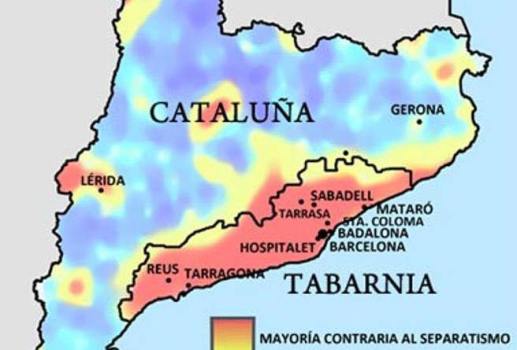
El movimiento está ganando envergadura, y crece no sólo en visibilidad, también en su planteamiento. Se ha incluido a Tarragona y su área de influencia en el proyecto y el resultado es “Tabarnia”, un territorio próspero en lo económico y contrario al separatismo en lo político.
Según ‘Barcelona is not Cat’, Cataluña está formada por “dos zonas claramente diferenciadas desde el punto de vista económico, lingüístico, identitario, poblacional y social”. La división administrativa actual, denuncian, no se corresponde con la realidad, “y por tanto es necesario cambiarla”.
La denominación Tabarnia, que ha hecho fortuna en las redes sociales, sería la zona geográfica comprendida entre las áreas metropolitanas de Barcelona y Tarragona, aunque las fronteras precisas no están del todo definidas.
Así, frente a la Cataluña “cosmopolita, orgullosamente bilingüe, urbanita, multicultural e intensamente conectada con el resto de España y Europa” se erigiría la Cataluña interior o rural, de escaso peso demográfico y “mayoritariamente independentista, basada en una economía local, obsesionada con la identidad y hostil a la lengua castellana”. Y pese a su mucho menor relevancia económica y demográfica, es la segunda Cataluña, la rural, la que “parece la única existente”, denuncian en “Barcelona is not Cat”.
Aseguran reunir para su causa a más de un centenar de agrupaciones, asociaciones y empresas de todos los ámbitos de Barcelona así como ciudadanos a título particular. Han nacido como respuesta al desafío rupturista, que tachan de “profundamente negativo para los intereses de Cataluña en general y de los ciudadanos de Barcelona en particular”. De manera que, ante el riesgo de secesión, buscan marcharse de Cataluña y permanecer unidos al resto de España, apelando para ello a motivos económicos, sociales, deportivos, culturales o educativos. Y se sirven del mismo argumentario separatista para reclamar una “consulta a la ciudadanía” que determine si los barceloneses y tarraconenses se erigen en una nueva comunidad autónoma o por el contrario continúan “bajo el gobierno de la Generalitat.
Los separadores ya tienen formación política.

‘Barcelona is not Catalonia’ is presented as a «citizen organization with a transversal, unitary and democratic basis» with a clear objective: to achieve its own political and fiscal management for Barcelona outside the Generalitat of Catalonia. Or what is the same, create a new autonomous community.
The movement is gaining importance, and it grows not only in visibility, but also in its approach. Tarragona and its area of influence have been included in the project and the result is «Tabarnia», a prosperous territory economically and contrary to political separatism.
According to ‘Barcelona is not Cat’, Catalonia is formed by «two zones clearly differentiated from the economic, linguistic, identity, population and social point of view». The current administrative division, they denounce, does not correspond to reality, «and therefore it is necessary to change it».
The name Tabarnia, which has made its fortunes in social networks, would be the geographical area between the metropolitan areas of Barcelona and Tarragona, although the precise borders are not completely defined.
Thus, compared to the Catalonia «cosmopolitan, proudly bilingual, urban, multicultural and intensely connected with the rest of Spain and Europe» would be erected the interior or rural Catalonia, of low demographic weight and «mostly independence, based on a local economy, obsessed with the identity and hostile to the Castilian language «. And despite its much lower economic and demographic relevance, is the second Catalonia, the rural, which «seems the only existing», denounce in «Barcelona is not Cat.»
They claim to gather more than a hundred groups, associations and companies from all areas of Barcelona for their cause as well as private citizens. They have been born as a response to the rupturist challenge, which they describe as «profoundly negative for the interests of Catalonia in general and of the citizens of Barcelona in particular». So that, faced with the risk of secession, they seek to leave Catalonia and remain united to the rest of Spain, appealing for it to economic, social, sports, cultural or educational reasons. And they use the same separatist argument to demand a «consultation to the citizenship» that determines if the Barcelonians and Tarraconenses are erected in a new autonomous community or on the contrary they continue «under the government of the Generalitat.
The separators already have political training.

 RAMROCK'S BLOG